
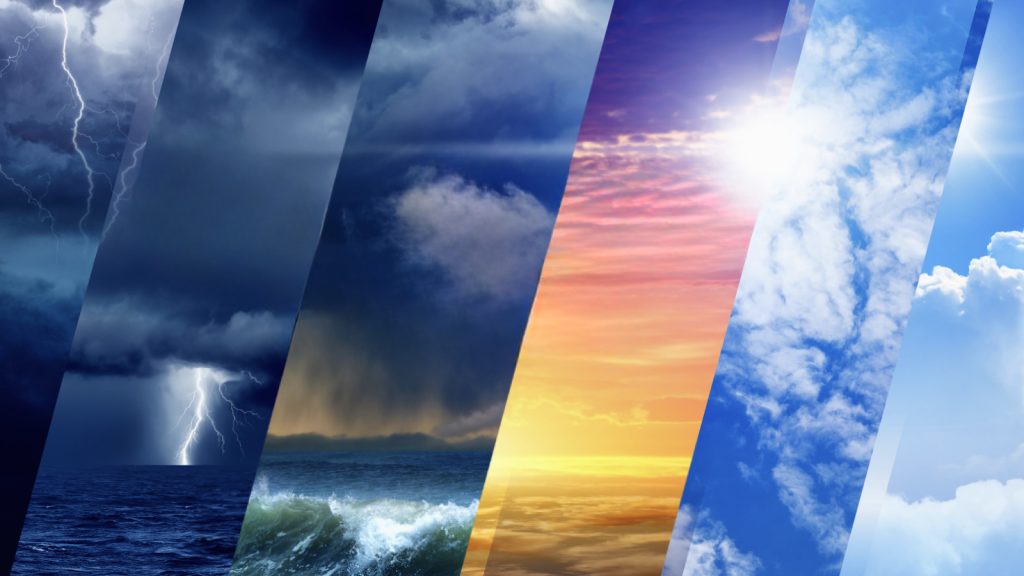
Weather and climate are two terms we use frequently, but they do not describe the same thing. So, what is the key difference between them?
Weather
Weather describes the atmospheric conditions prevailing in a particular place over a short period of time — from hour to hour or from day to day. Temperature, rainfall, sunshine, wind or snow can change very quickly.
Climate
Climate, on the other hand, gives us the bigger picture. It describes the average weather conditions that characterize a region over a long period of time, usually 30 years or more. This allows us, for example, to talk about Mediterranean, tropical or polar climates.
A simple example
A sudden thunderstorm, a day with very high temperatures or an unusually cold morning are events related to weather. They can occur and change within a few hours or days.
Climate, however, cannot be described by a single event. To understand the characteristics of a region, we examine what happens repeatedly and over a long period of time: how warm summers usually are, how frequent rainfall is, how temperatures vary and which patterns recur from year to year.
How do we study climate?
The study of climate is based on long-term meteorological observations. Temperature, precipitation, wind, humidity and other variables are systematically recorded and compared over decades.
This allows us to distinguish a temporary change in the weather from a more persistent change in the climatic characteristics of a region. Long-term data series help us understand not only what the climate of a place is like, but also how it changes over time.
Why does the difference matter?
A cold day does not mean that the climate of a region has become colder. Likewise, a particularly hot day is not enough on its own to describe climate change.
To understand climate, we examine long-term observations, recurring patterns and changes recorded over time.
Weather tells us what is happening now.
Climate shows us what usually happens over time.
Weather and climate: two different timescales
The difference between weather and climate becomes easier to understand when we compare the different timescales involved — from rapidly changing atmospheric conditions to long-term patterns observed over decades.
The Climate-EDU infographic on weather and climate is currently available in Greek.
View the Greek version with infographic
Understanding the difference between weather and climate is an important step towards better interpreting the changes we observe in the atmosphere and in the environment around us.