
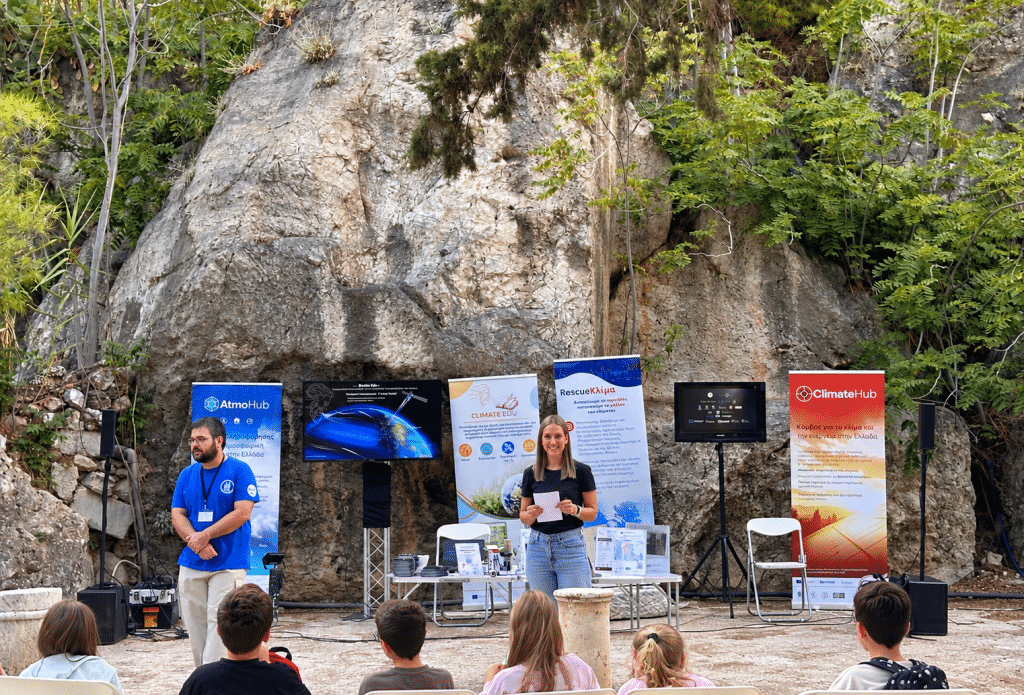
On Friday, 25 September 2026, the NOA-ReACT team and Climate-EDU took part in Researchers’ Night at the National Observatory of Athens in Thissio.
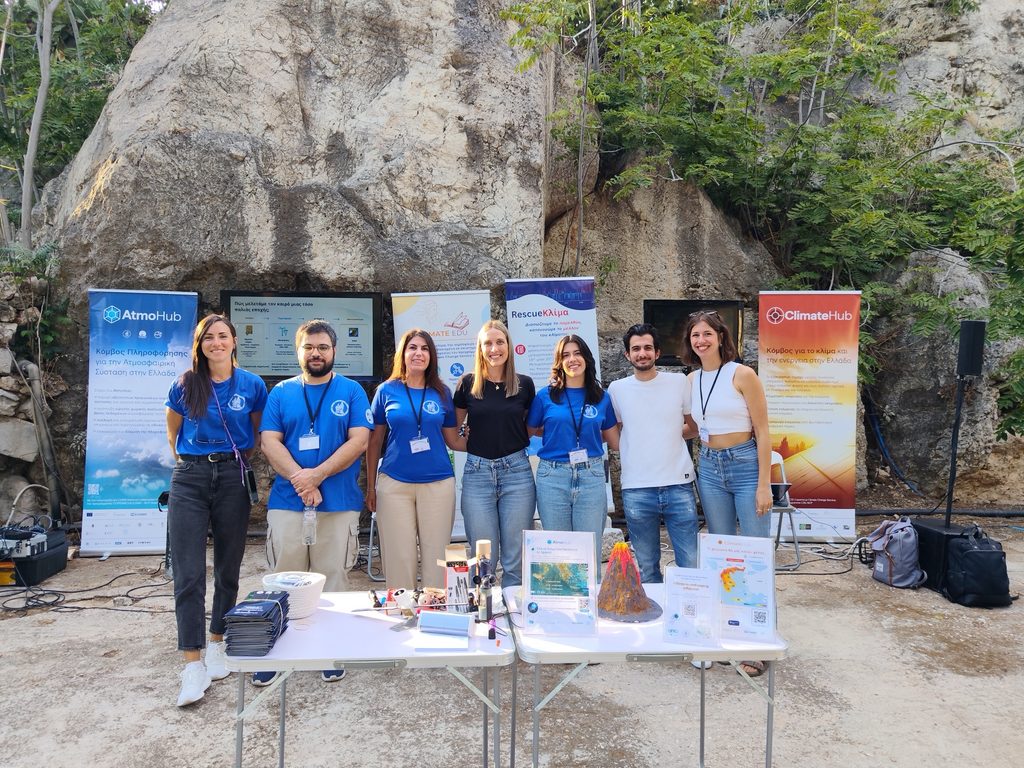
Through interactive applications, educational games, experiments and presentations based on real scientific data, visitors explored different aspects of atmospheric and climate science. Winds, seasonal forecasts, satellite observations, volcanoes and weather from the past became opportunities for observation, discussion and discovery.
From the wind… all the way to space
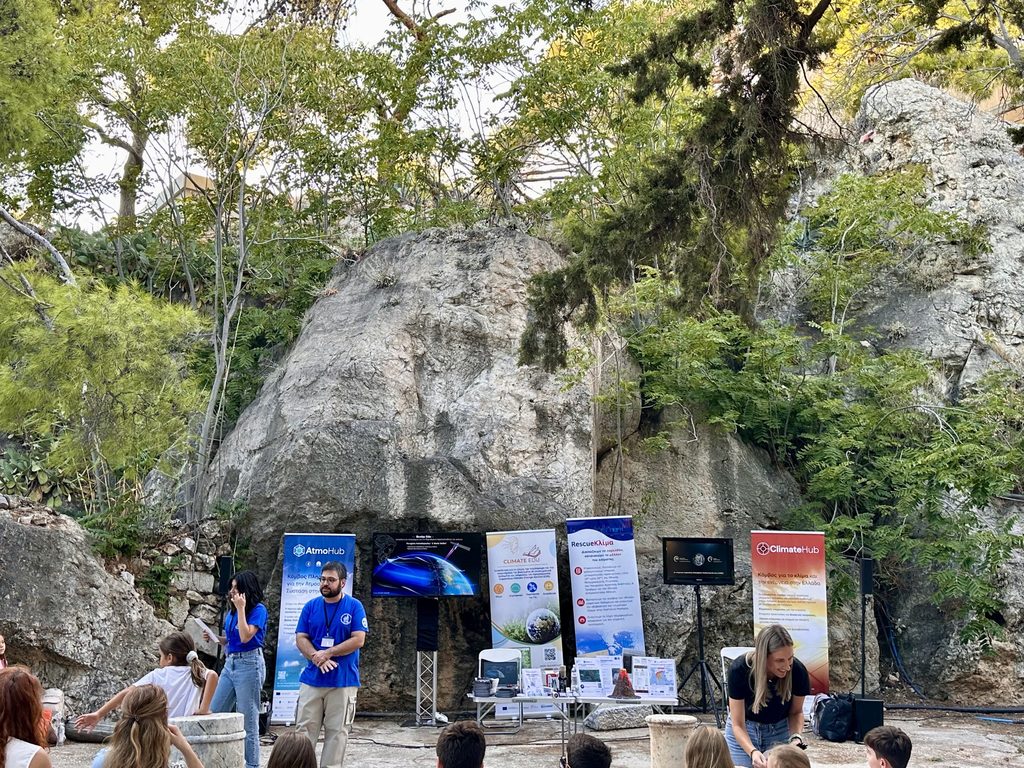
One of the activities was dedicated to Aeolus and the observation of winds.
Through a presentation and a quiz, visitors explored how wind is formed, how it is measured at the Earth’s surface and how it can be observed from space.
Questions such as “How do we measure wind speed?”, “Which regions of the Earth receive the most heating from solar radiation?” and “How is laser technology used?” turned scientific knowledge into an interactive learning experience.
What kind of winter will we have this year?
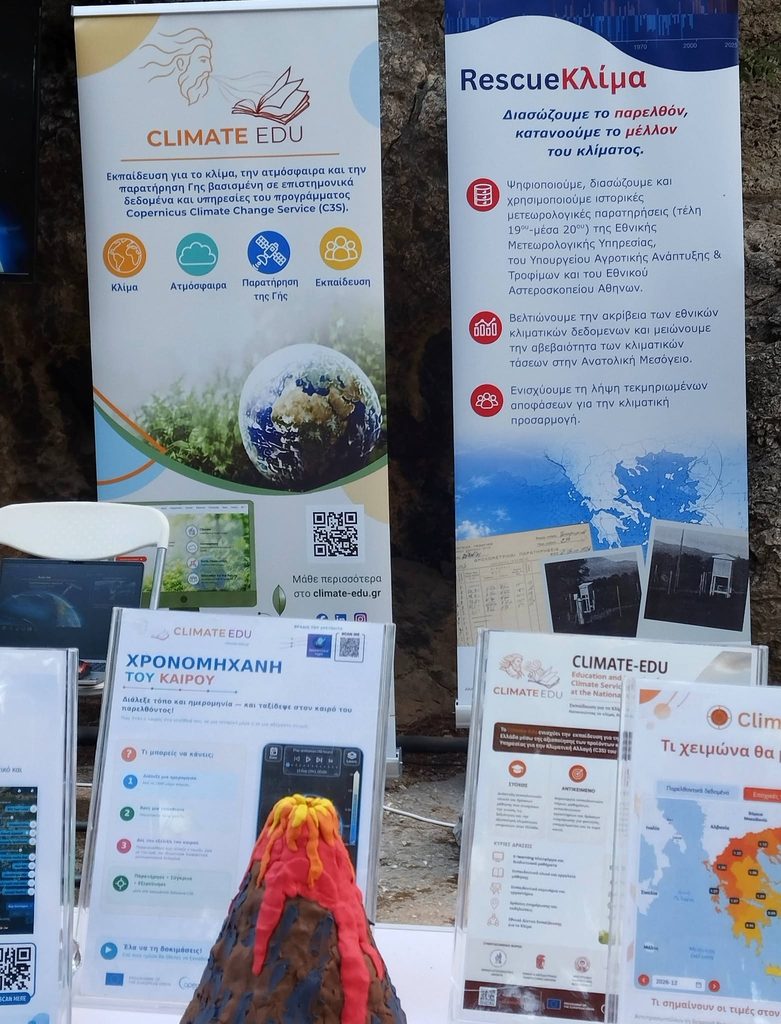
Through ClimateHub, visitors became familiar with tools used to understand the climate and possible future conditions.
Starting with the question “What kind of winter will we have this year?”, examples based on historical data and seasonal forecasts showed how climate information can be transformed into useful knowledge.
Through the “Weather Machine” (Weather Replay), visitors could travel back to key moments in the recent past and discover what the weather was like using real meteorological data. From the Opening Ceremony of the Athens Olympic Games and the EURO 2004 final to Storm “Elpida” and major heatwaves in Athens, visitors first made their own estimate and then compared it with what actually happened.
A volcano “erupted” in front of the audience
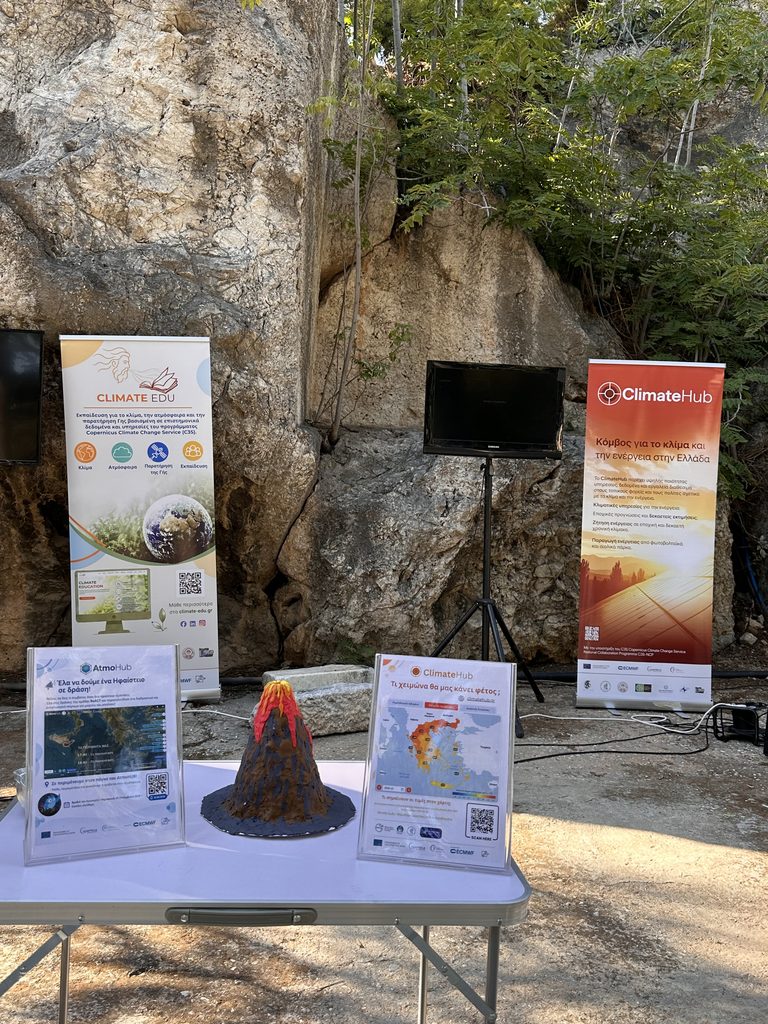
Science became even more hands-on through an experiment that captured the attention of both children and adults: we made a “volcano” erupt.
The experiment provided an opportunity to discuss phenomena related to the atmosphere, airborne particles and the environment, demonstrating how even complex scientific concepts can become easier to understand through observation and experimentation.
Travelling back in time
With Climate-EDU, however, we did not only look at the present and the future. We travelled back in time.
Through an educational activity on the Battle of Salamis, we explored how weather conditions — and especially wind — can be connected to important historical events.
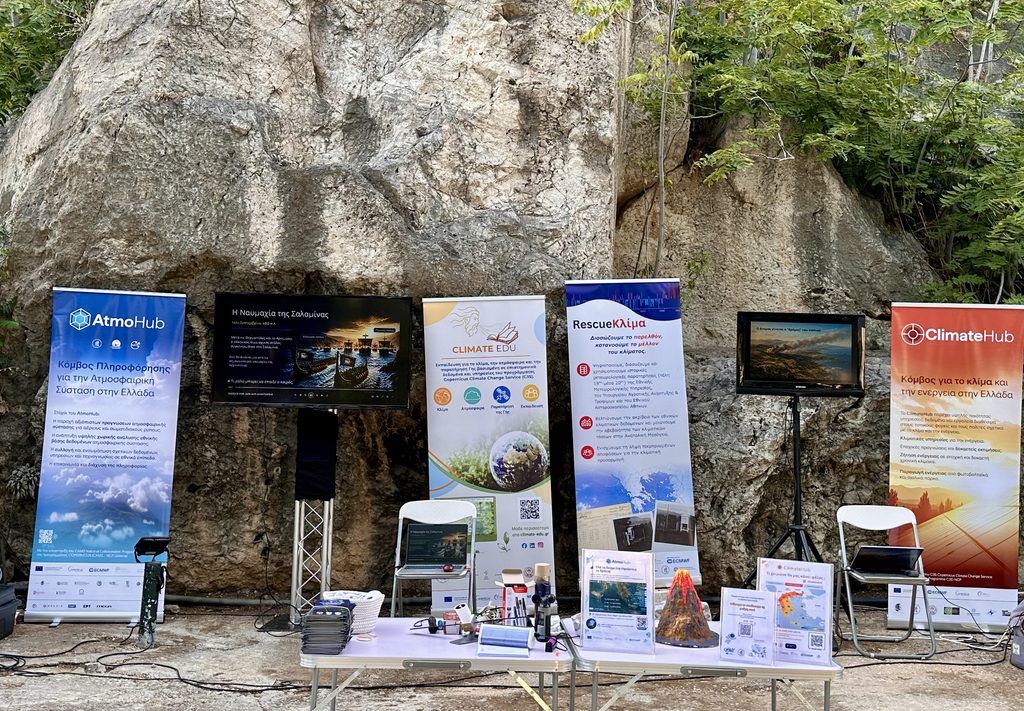
Visitors were therefore able to see meteorology from a different perspective: not only as a science that helps us understand today’s climate, but also as a tool for exploring the past.
ClimateHub, AtmoHub and Climate-EDU together
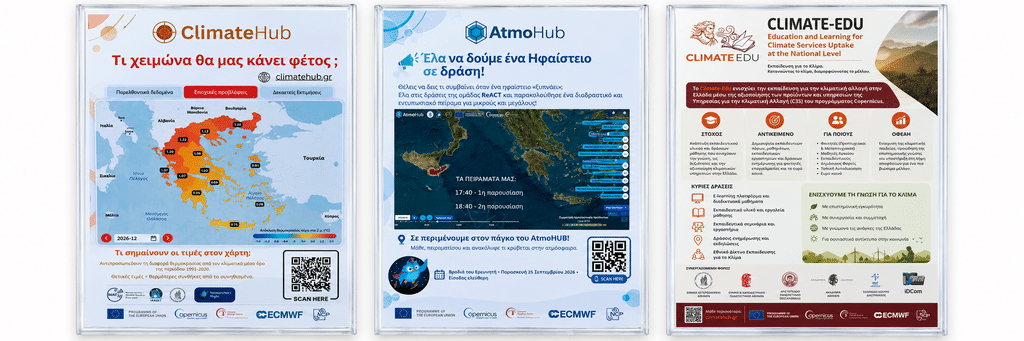
At the event, visitors also had the opportunity to learn more about the ClimateHub and AtmoHub information hubs, as well as Climate-EDU.
Through information material, maps, applications and educational activities, we presented how:
ClimateHub brings climate data and services closer to the public.
AtmoHub focuses on the atmosphere, aerosols and air quality.
Climate-EDU transforms scientific knowledge and data into educational experiences for students, educators and the wider public.
Science through experience
From a satellite observing winds and a volcano “erupting” in front of visitors, to seasonal forecasts and a journey into the weather conditions of ancient Salamis, Researchers’ Night gave us the opportunity to show that science can become an experience, a game, a question and a discovery.
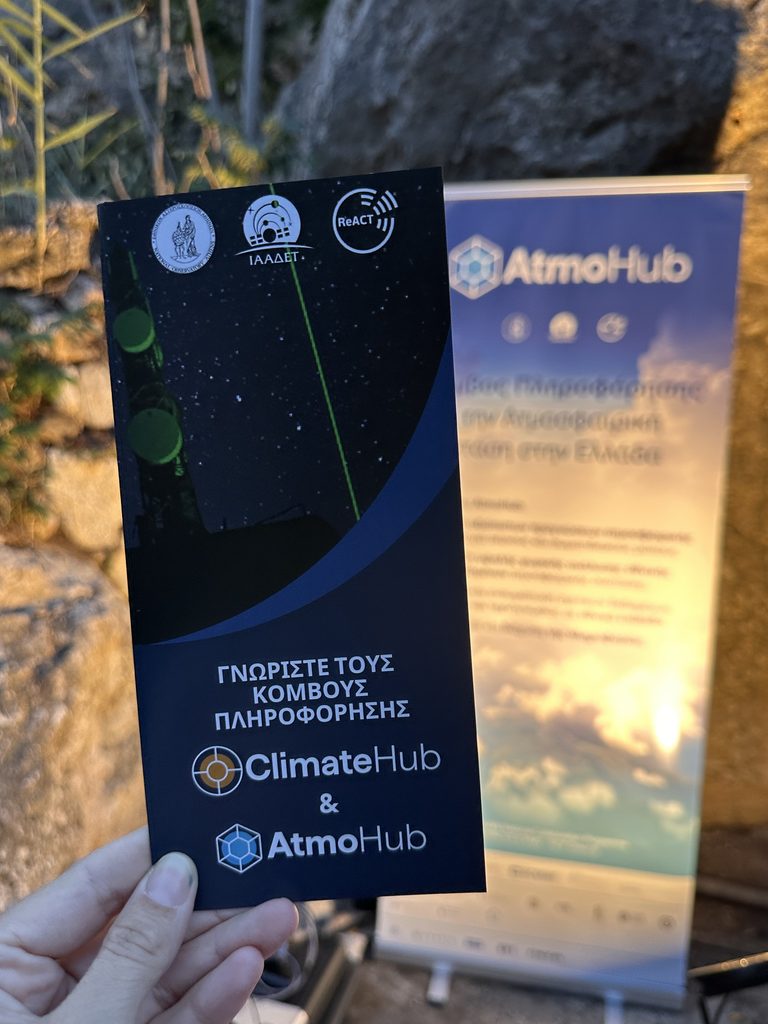
The NOA-ReACT team warmly thanks everyone who joined us, took part in the activities and discussed contemporary issues related to atmospheric physics, climate and the environment. We are always delighted to have the opportunity to share our science with children and adults alike and to explore together the fascinating world of the atmosphere and climate.