
How does a forecast of hazardous weather conditions become a timely warning? The ECMWF online course “Early Warning Systems for weather-induced hazards”, available on the ECMWF Learning platform, explores this process: from monitoring and forecasting to communicating information that supports informed decision-making.
Developed within the MedEWSa project, this introductory course has an estimated duration of two hours. It focuses on the core technical elements of early warning systems, including monitoring, forecasting and risk identification, while also addressing disaster preparedness, risk reduction, protective actions and warning communication.
Participants will learn about the main components of an Early Warning System (EWS), its four pillars and the key actors involved. The course also explores why early warning systems sometimes fail and how forecast quality and uncertainty influence decision-making. Particular emphasis is placed on clear, effective and inclusive communication: warnings must reach the people at risk, help them understand the information provided and support appropriate anticipatory action.
The course offers an accessible introduction to the connection between scientific information, preparedness and action, highlighting how effective early warning systems can help reduce the impacts of weather-related hazards.
Explore the course on ECMWF Learning
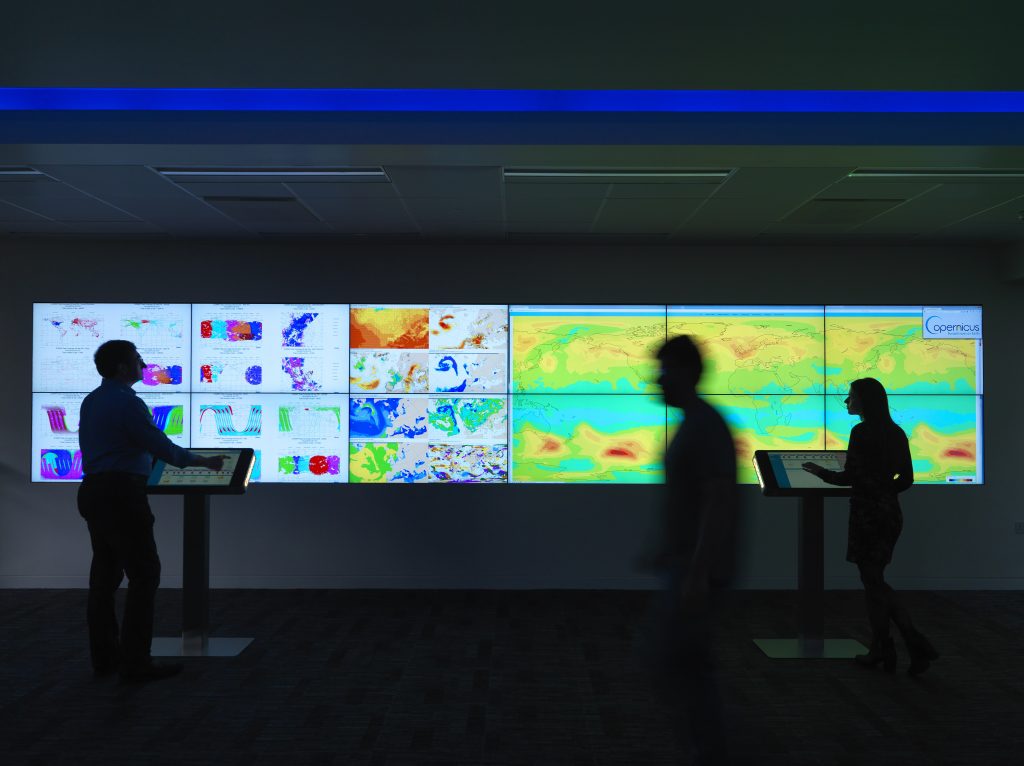
Photo: Weather Room at ECMWF