
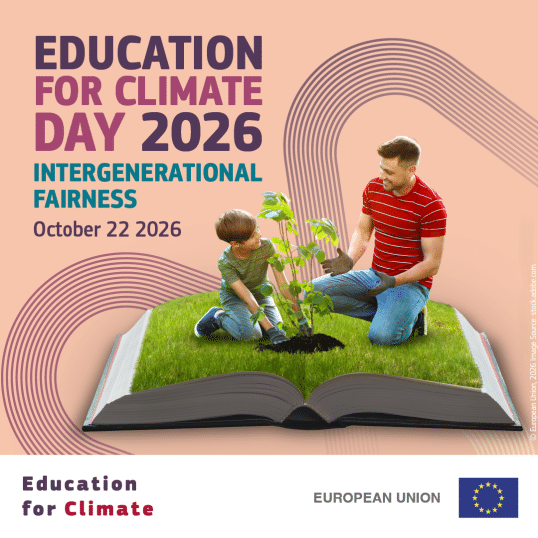
What does a fairer, greener future look like – and how can education help us build it together?
On 22 October 2026, educators, young people, researchers, policymakers and community members came together in Brussels and online for Education for Climate Day 2026. This year’s event explored intergenerational fairness, bringing fresh perspectives, inspiring projects and practical ideas for making climate education more inclusive and impactful.
Missed the event or want to revisit your favourite discussions? Here are some of the highlights!
Building a fairer future for all generations
The day opened with a powerful question:
How can the choices we make today benefit people now without compromising the future of generations to come?
Our opening panel explored what intergenerational fairness means for education and climate policy. A key message emerged:
Young people should not simply be consulted about decisions affecting their future – they need genuine opportunities to shape them.
Looking ahead to COP31, the next discussion explored how education can strengthen young people’s voices in international climate action. One inspiring example came from Spain, where students researched the threat of rising sea levels to their community, created a film and brought their findings to local authorities.
From climate anxiety to positive action
How can we help young people turn worries about climate change into confidence and action?
Participants from this year’s Youth Climate Lab shared the outcomes of their work on eco-anxiety and resilience, including six practical recommendations for educators and creative learning activities. From creating safe spaces to express emotions to encouraging student-led climate projects, their ideas showed how education can build hope and encourage action.
The session also highlighted the ongoing Youth Climate Lab 3 Follow-up Challenge, which brings together former Lab participants and local facilitators from six countries. Working in three groups, they are putting the Lab’s ideas on traditional ecological knowledge into practice in their local communities, with activities continuing until April 2027.
We also discovered how ideas from previous Youth Climate Labs are being taken forward and tested with local communities.
Imagining sustainable futures through education
Next, three winning projects from the Annual Call for Innovative Green Education Actions showed how the European GreenComp framework can come to life in classrooms.
Through the World Climate Game, young people explored difficult climate decisions by stepping into the roles of policymakers, businesses and citizens. FOODLOOP introduced kindergarten children to sustainable food systems through hands-on activities, while The Climate Coaches helped students explore different pathways towards a climate-neutral future.
As FOODLOOP’s Aikaterini Spitsa put it:
Don’t just teach children about a sustainable future. Give them the opportunity to imagine and help create it.
Building trust in a world of misinformation
In the afternoon, our speakers tackled another pressing challenge: climate misinformation.
The discussion explored how misleading information spreads, why it can deepen divisions between generations and how education can help. The takeaway?
Learning to question information, check reliable sources and discuss different perspectives respectfully is essential for building trust and supporting informed climate action.
Celebrating innovative green education projects
The final sessions put the spotlight on more winners of this year’s Annual Call, showing how young people and communities are turning learning into real-world change.
In the youth projects session, we discovered how children are helping redesign schoolyards in Santander, how students across Türkiye are turning climate education into action through climate debates, sustainability idea marathons and zero-waste activities, and how young people in Poland are working with scientists and local authorities to address water-related challenges.
The citizenship projects session showcased three more inspiring initiatives: Earth Science for Tomorrow’s Citizens, which connects classroom learning with real scientific data; the Paris Nature Programme, which makes nature education accessible to people of all ages; and Regenerative Economics for Secondary Schools, which encourages students to rethink how economies can support people and the planet.
Different approaches, but one shared ambition: giving people the knowledge, confidence and opportunities to make a difference.
Let’s keep the momentum going!
As the event drew to a close, one message stood out:
Meaningful climate action starts with education, but grows stronger when people across generations learn from one another, share ideas and work together.
A big thank you to all our speakers, moderators, project winners and participants for making Education for Climate Day 2026 such an inspiring experience!
Repost from: https://education-for-climate.ec.europa.eu/topic/education-climate-day-2026-turning-ideas-action-across-generations